How to win back dormant clients on WhatsApp: the full sequence
A client stops coming without a word. They're not upset and they haven't switched to a competitor: they've simply gone quiet, and every week that passes makes them harder to win back. This guide walks you through the complete sequence to reactivate dormant clients on WhatsApp, message by message, from spotting the absence to knowing when to stop.

In this article7 sections
The dormant client doesn't warn you: they fade
A client who came in regularly for months stops booking. They don't complain, don't ask for an explanation, don't announce they're leaving: they simply stop showing up. At the front desk nobody notices, because a client who doesn't come in triggers no alert. The calendar only shows who has an appointment, never who should have one and doesn't.
We call that client dormant: not fully lost, but every week of silence pulls them a little further away. They still remember you, they still hold a good experience of your center, and that's exactly why winning them back costs far less than acquiring someone new. The problem isn't that they left; it's that nobody noticed they were about to.
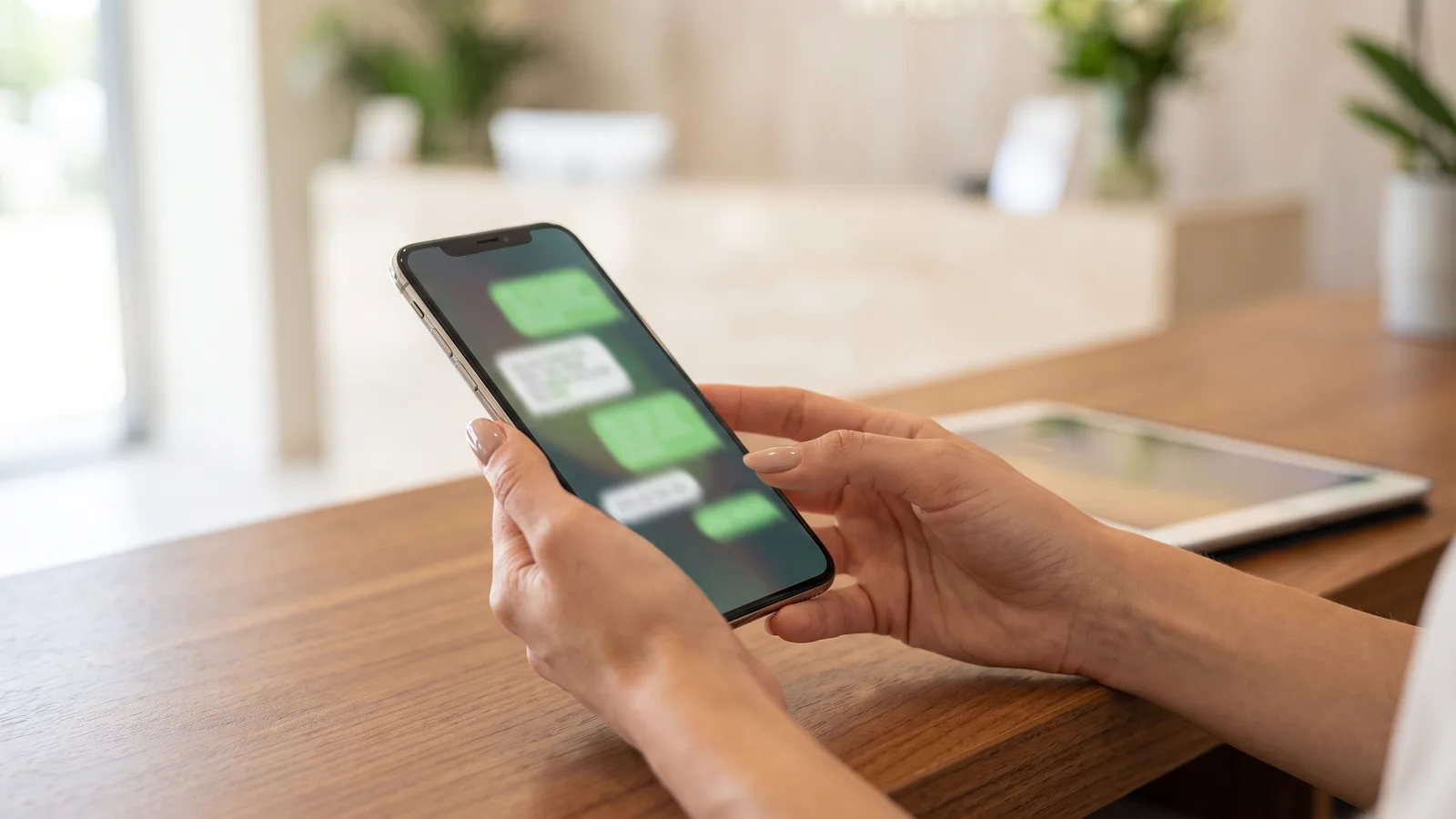
Winning clients back on WhatsApp works precisely because it's the channel where the conversation feels personal rather than promotional. But a one-off message isn't a strategy. What recovers clients is a sequence: knowing who to write to, in what order to say things, and above all when to go quiet.
The leak no calendar shows
When a client fades, there's no red gap to warn you. On paper nothing happened: an appointment nobody expected simply wasn't booked. If your system doesn't detect that absence, the loss stays invisible until it's too late.
Before you write: define who's dormant
The most common mistake is starting with the message. The sequence doesn't begin with what you write, but with who you decide to write to. For that you need a clear definition of when a client moves from «on track» to «dormant», because that threshold isn't the same for every service.
A treatment repeated every six weeks and one reviewed once a year produce very different absences. So the threshold is set per service, using the judgment of the professional who performs it: at what point would it make sense to review the result or suggest continuity? That point is your alert line.
- Set a threshold per service: for each recurring treatment, decide how many weeks of absence turn it into a signal worth a contact.
- Cross your client base with the last visit: anyone past their threshold is silently choosing between coming back or not.
- Prioritize with judgment: start with solid relationships, half-finished treatments, or clients with a pending next step, not just the highest ticket.
- Check consent: before writing, confirm the person agreed to receive communications and hasn't opted out.
The full sequence, message by message
A reactivation sequence isn't one offer sent three times. It's a conversation rebuilt in stages, saving the commercial pitch for last. The proportion matters: relationship first, value next, and only at the end a concrete invitation. Flip that order and the message reads as an ad, and the client ignores it.
Here are the four steps. The timings are guidance and you can tune them to your center's rhythm, but the order doesn't change.
- Step 1 — The personal message (day 0): a warm hello, using their name and, where relevant, that of their regular professional. No offer. You ask how they are and make it easy to say they'd rather not get more messages. It's the touch that reopens the door.
- Step 2 — The value reminder (a week later): if they haven't replied, share something relevant to that person: a care tip, a review that's due, or a result worth maintaining. Still no offer; you remind them why they came, not that they should buy.
- Step 3 — The bridge offer (another week later): now, yes, a concrete reason to return: a review appointment, a slot held for them, or a benefit designed to restart, with no false urgency or invented countdown.
- Step 4 — Stop: if there's no reply after the third message, end the sequence. Silence is an answer too, and respecting it protects your reputation and the relationship for later.
Reactivating is listening, not pushing
The line between reactivating and pestering is the order and the brake. A sequence that rebuilds the relationship before asking for the booking wins clients back; one that only repeats «we've got an offer» loses them for good. Knowing when to stop is part of the method.
Consent and good practice: the fine print that protects you
WhatsApp is a direct channel, and that closeness demands extra care. Before launching any sequence, make sure you're only writing to people who agreed to receive communications, and always offer a clear way to opt out. A client who asks to stop receiving messages must stop getting them immediately: it's an obligation and, frankly, good commercial manners.
Two honest limits are worth stating. No system guarantees a message will be delivered or that platform rules and the applicable data protection rules are met automatically: that depends on how you configure your sends and on WhatsApp's terms at any given time. And no sequence, however good, promises to recover a specific percentage of clients; what it gives you is an orderly process to try, with respect.
So keep the volume low and the message relevant. To go deeper into building these flows and the real cost of each way to integrate WhatsApp, two practical resources: build your WhatsApp funnels and the comparison guide to the 5 ways to integrate it.
Typical center: what the effect looks like in practice
To make it tangible, let's picture a typical center and an illustrative scenario. These aren't measured figures, but a hypothesis to explain the mechanism.
Typical center (illustrative figures, not measured)
Imagine a center with 200 clients past their absence threshold. If each month you review that list, send the sequence only to those who can receive it, and some reply and return, those recovered visits are revenue that used to leak away in silence. These figures are illustrative to explain the mechanism, not real results measured in Qleven.
From a list by hand to the system that sustains it
With ten clients, this sequence runs by hand just fine. With your whole base, you need rules, permissions, and traceability: knowing who's due, who gave consent, what message went out, and what they replied. That's where a system that keeps the client profile, the history, and the conversation in one place stops being a luxury.
In Qleven, client management brings the profile, the history, and the conversation together in one place, so you can segment by last visit and prepare reactivation journeys that the team validates before sending. Automations rest on real data and respect the consent and the commercial-pressure limit you define.
For the full method, step by step, the Forever Client mini-course devotes its final module to the conversation that reactivates without pestering. Start with your list of ten and stop letting silence cost you clients.
What if your center stopped having invisible leaks?
We show you Qleven working on your center's real operations. No commitment, in 15 minutes.
See Qleven in your center · 15-min demoFrequently asked questions
How often should I write in a WhatsApp reactivation sequence?
Can I message any client who hasn't come in for a while?
What's the difference between reactivating and spamming?
How do I know which clients are dormant?
Keep digging deeper
The Qleven features that solve what you just read about.
Continue with these reads
Selected by topic affinity and the operational workflow they share.
Who follows up once the session ends?
8 min read
The Funnel Fallacy: Why Retention Beats Acquisition (and How Qleven Turns Loyalty Into an Engine That Runs Itself)
8 min read